José Giovanni

José Giovanni

Writing 1923-06-22 Paris, France

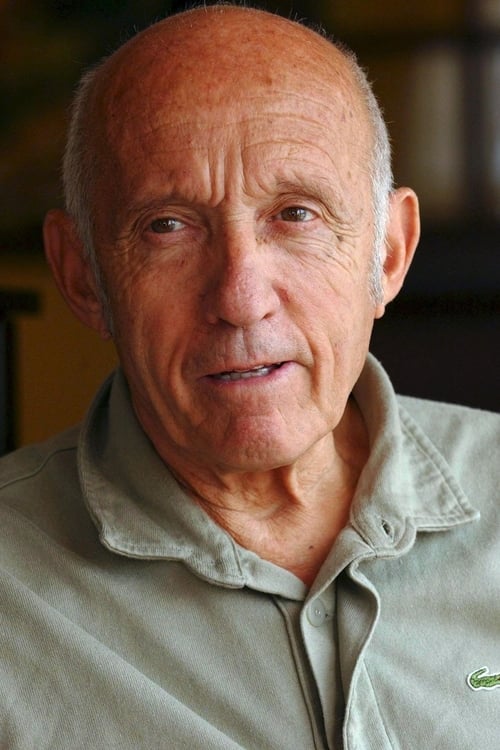
José Giovanni (22 June 1923, Paris, France – 24 April 2004, Lausanne, Switzerland) was the pseudonym of Joseph Damiani, a French writer and film-maker of Corsican origin who became a naturalized Swiss citizen in 1986. A former collaborationist and criminal who at one time was sentenced to death, Giovanni often drew his inspiration from personal experience or from real gangsters, such as Abel Danos in his 1960 film Classe tous risques, overlooking that they had been members of the French Gestapo. In his films as well as his novels, while praising masculine friendships and advocating the confrontation of the individual against the world, he often championed the underworld but was always careful to hide his own links with the Nazi occupiers of France during World War II. Of Corsican descent, Joseph Damiani received a good education, studying at the Collège Stanislas de Paris and the Lycée Janson de Sailly. His father, a professional gambler who was sentenced to a year in prison for running an illegal casino, owned a hotel in the French Alps in Chamonix. Joseph worked there as a young man and became fascinated by mountain climbing. From April to September 1943 Damiani was a member of Jeunesse et Montagne (Youth and Mountain) in Chamonix, part of the Vichy Government youth movement controlled by Pierre Laval. In February 1944 Damiani came to Paris and through his father's friend, the LVF leader Simon Sabiani, he joined Jacques Doriot's fascist French Popular Party (PPF). His maternal uncle, Ange Paul Santolini alias "Santos", who ran a restaurant patronized by the Gestapo, and his elder brother, Paul Damiani, a member of the Vichy paramilitary Milice, introduced Joseph into the Pigalle underworld. In March 1944 Joseph Damiani went to Marseille where he became a member of the German Schutzkorps (SK), an organization which hunted down Service du travail obligatoire - STO (Compulsory Work Service) dodgers. He served as bodyguard to its Marseille chief and took part in many arrests, often blackmailing his victims. In Lyon, in August 1944, posing as a German police officer along with an accomplice (Orloff, a Gestapo agent who was shot for treason at the Liberation), Damiani blackmailed Joseph Gourentzeig and his brother-in-law Georges Edberg, two Jews who were in hiding. Gourentzeig had bribed a member of the Milice - a friend of Damiani’s – in an attempt to secure his parents' release from a detention camp. They were not freed and Gourentzeig's father, Jacob, was shot by the Germans shortly after, on 21 August 1944, along with 109 Jewish hostages in the Bron (Lyon airport) massacre. After the Liberation in Paris on 18 May 1945, Joseph Damiani, his brother Paul, Georges Accad, a former Gestapo agent, and Jacques Ménassole, a former member of the Milice wearing a French Army lieutenant's uniform - all posing as Military Intelligence officers - abducted Haïm Cohen, a wine merchant, accusing him of being a black marketeer. He was tortured until he gave them the key to his safe and a check for 105,000 francs. He was then shot and his body thrown into the Seine. Joseph Damiani cashed the check at Barclay's Bank under the identity of "Count J. de Montreuil". ... Source: Article "José Giovanni" from Wikipedia in English, licensed under CC-BY-SA 3.0.

代表作

📜

全部作品

2018 Self (archive footage)
2014 Screenplay
2007 Dialogue
2007 Novel
1998 Self
1996 Director
展开全部作品
1996 Writer
1991 Director
1988 Director
1985 Director
1985 Writer
1983 Director
1983 Novel
1983 Writer
1982 Self
1981 Writer
1981 Director
1979 Director
1979 Writer
1977 Director
1977 Writer
1976 Self
1976 Director
1976 Writer
1975 Director
1975 Novel
1975 Screenplay
1974 Self
1973 Director
1973 Dialogue
1973 Screenplay
1972 Director
1972 Writer
1972 Novel
1972 Author
1971 Director
1971 Screenplay
1971 Writer
1971 Director
1970 Director
1970 Writer
1969 Screenplay
1969 Dialogue
1968 Director
1968 Writer
1968 Novel
1967 Screenplay
1967 Novel
1967 Director
1967 Writer
1967 Novel
1966 Writer
1966 Writer
1966 Writer
1965 Dialogue
1965 Novel
1963 Moreau
1963 Writer
1963 Dialogue
1963 Adaptation
1963 Dialogue
1961 Dialogue
1961 Novel
1960 Adaptation
1960 Dialogue
1960 Novel
1960 Novel
1960 Screenplay
1960 Dialogue