Darius Milhaud

Darius Milhaud

Sound 1892-09-04 Marseille, Bouches-du-Rhône, France

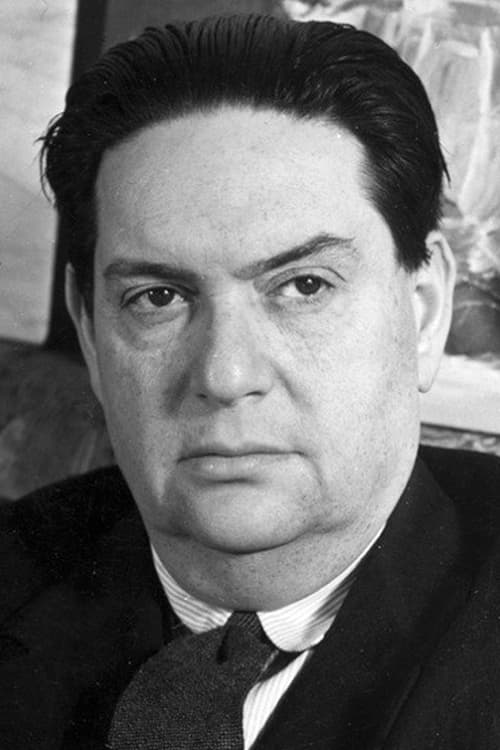
Darius Milhaud (4 September 1892 – 22 June 1974) was a French composer, conductor, and teacher. He was a member of Les Six—also known as The Group of Six—and one of the most prolific composers of the 20th century. His compositions are influenced by jazz and Brazilian music and make extensive use of polytonality. Milhaud is considered one of the key modernist composers. A renowned teacher, he taught many future jazz and classical composers, including Burt Bacharach, Dave Brubeck, Philip Glass, Steve Reich, Karlheinz Stockhausen and Iannis Xenakis among others. Milhaud was born in Marseille, the son of Sophie (Allatini) and Gad Gabriel Milhaud. His father was from an Ashkenazi Jewish family from Aix-en-Provence, and his mother from a Sephardi Jewish family from Italy. Milhaud began as a violinist, later turning to composition instead. Milhaud studied in Paris at the Paris Conservatory where he met his fellow group members Arthur Honegger and Germaine Tailleferre. He studied composition under Charles Widor and harmony and counterpoint with André Gedalge. He also studied privately with Vincent d'Indy. From 1917 to 1919, he served as secretary to Paul Claudel, the eminent poet and dramatist who was then the French ambassador to Brazil, and with whom Milhaud collaborated for many years, setting music for many of Claudel's poems and plays. While in Brazil, they collaborated on a ballet, L'Homme et son désir. On his return to France, Milhaud composed works influenced by the Brazilian popular music he had heard, including compositions of Brazilian pianist and composer Ernesto Nazareth. Le bœuf sur le toit includes melodies by Nazareth and other popular Brazilian composers of the time, and evokes the sounds of Carnaval. Among the melodies is, in fact, a Carnaval tune by the name of "The Bull on the Roof" (in Portuguese, which he translated to French 'Le boeuf sur le toit', known in English as 'The Ox on the Roof'). He also produced Saudades do Brasil, a suite of twelve dances evoking twelve neighborhoods in Rio de Janeiro. Shortly after the original piano version appeared, he orchestrated the suite. Contemporary European influences were also important. Milhaud dedicated his Fifth String Quartet (1920) to Arnold Schoenberg, and the following year conducted both the French and British premieres of Pierrot lunaire after multiple rehearsals. And on a trip to the United States in 1922, Milhaud heard "authentic" jazz for the first time, on the streets of Harlem, which left a great impact on his musical outlook. The following year, he completed his composition La création du monde (The Creation of the World), using ideas and idioms from jazz, cast as a ballet in six continuous dance scenes. In 1925, Milhaud married his cousin, Madeleine (1902–2008), an actress and reciter. In 1930 she gave birth to a son, the painter and sculptor Daniel Milhaud, who was the couple's only child. ... Source: Article "Darius Milhaud" from Wikipedia in English, licensed under CC-BY-SA 3.0.

代表作

📜

全部作品

1992 Original Music Composer
1969 Original Music Composer
1959 Self
1956 Music
1950 Self
1950 Original Music Composer
1949 Original Music Composer
展开全部作品
1947 Original Music Composer
1947 Conductor
1947 Original Music Composer
1940 Original Music Composer
1939 Sound Director
1939 Original Music Composer
1938 Original Music Composer
1937 Original Music Composer
1936 Original Music Composer
1936 Music
1935 Original Music Composer
1934 Original Music Composer
1933 Original Music Composer
1924
1924 Original Music Composer
1922 Music